Branding
Coral Spiral Abstract
Description: A visually striking 3D abstract artwork featuring a coral-colored spiral form with smooth, flowing curves and a soft pink gradient background, emphasizing modern digital aesthetics and organic geometry.
Type :
2025
Timeline :
Beauty
Context :
VisualForms Studio
Role :
3 weeks

Project Background & Personal Journey
StuCam started from a real-life moment when I met a singer on a bus who needed someone to shoot short videos/reels of her performance, but she did not know where to find an affordable and reliable local videographer. That moment made me realize there is a gap between people who need quick creative help and photographers or creators who are looking for real paid opportunities.
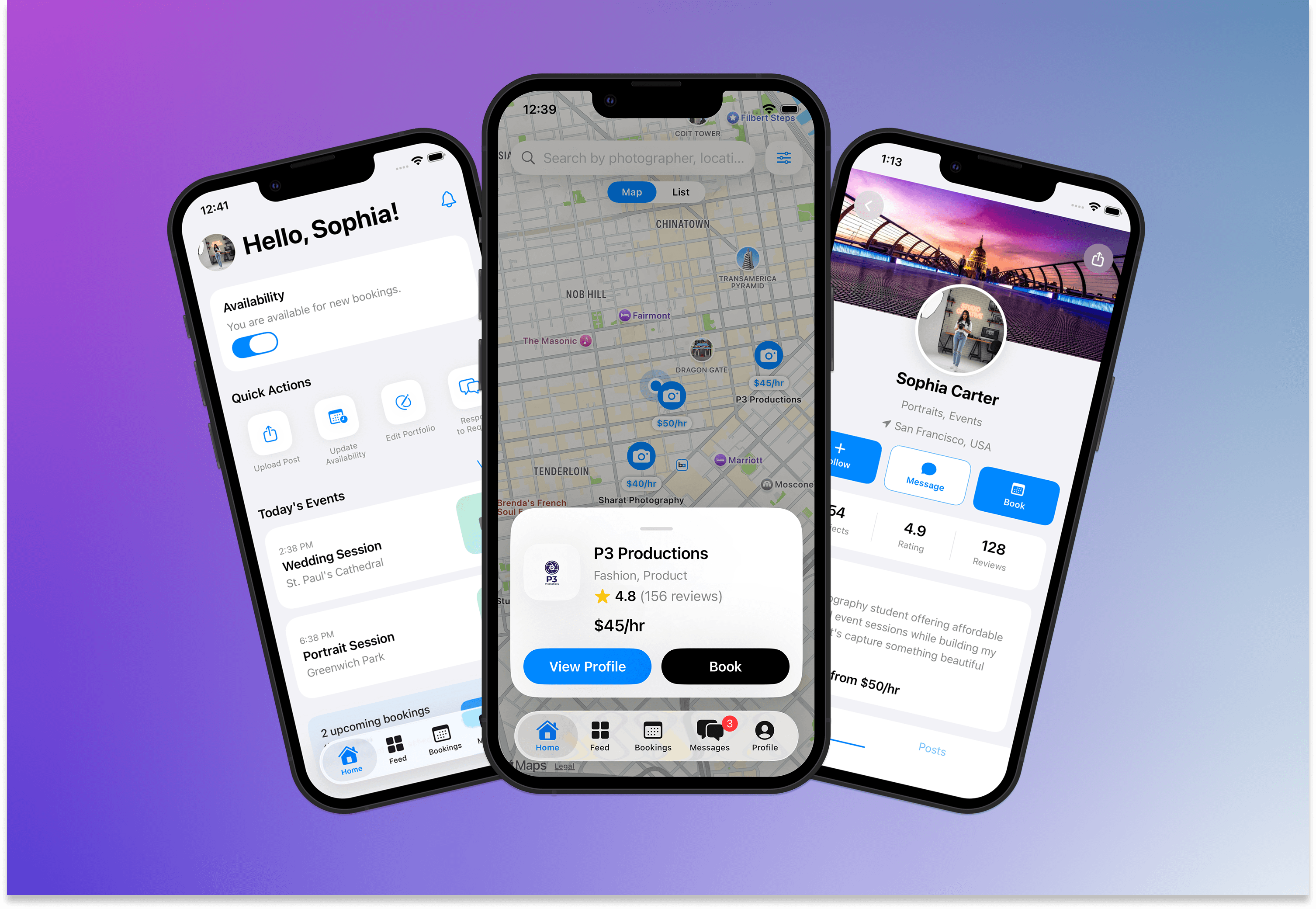
StuCam explores how a local-first booking platform can make it easier for clients to discover, compare, and book nearby photographers through portfolios, pricing, availability, and in-app messaging.
Problem :
In the world of digital art, it can be difficult to create abstract compositions that are both visually captivating and harmonious. Many 3D artworks either lack a sense of organic flow or fail to stand out due to uninspired color choices.

Solution :
This project introduces a 3D abstract artwork centered on a coral-colored spiral form with smooth, flowing curves. Set against a soft pink gradient background, the design leverages organic geometry to create a sense of movement and depth.
The use of coral tones brings warmth and vibrancy, while the gentle gradient enhances the overall softness and modern appeal. This composition aims to capture attention while remaining elegant and balanced.


User Archetypes
Based on the research, I identified four key user archetypes that shaped the design direction for StuCam. These archetypes helped me understand the different motivations, pain points, and expectations across both sides of the marketplace.
Portfolio Builder
A beginner photographer who wants real-world experience, paid gigs, and portfolio credibility.
Needs: visibility, trust, client opportunities
Pain point: people hesitate to book them without proof of experience
Opportunity: curated portfolio, reviews, and profile credibility
Budget Creator
A student, artist, or small business owner who needs affordable photography or reel content.
Needs: clear pricing, reliable options, simple booking
Pain point: professional services feel too expensive or hard to compare
Opportunity: transparent rates, filters, and local photographer discovery
Event Improviser
A performer, musician, or creator who needs someone available quickly for a shoot or event.
Needs: fast availability, location-based discovery, quick communication
Pain point: last-minute creative needs are hard to solve through DMs
Opportunity: availability toggle, Near You feed, and instant messaging
Side-Hustler
A photographer who wants flexible paid work while balancing school, work, or other commitments.
Needs: flexible scheduling, booking control, income opportunities
Pain point: inconsistent client flow and unclear expectations
Opportunity: booking dashboard, availability calendar, and structured client requests
User Personas
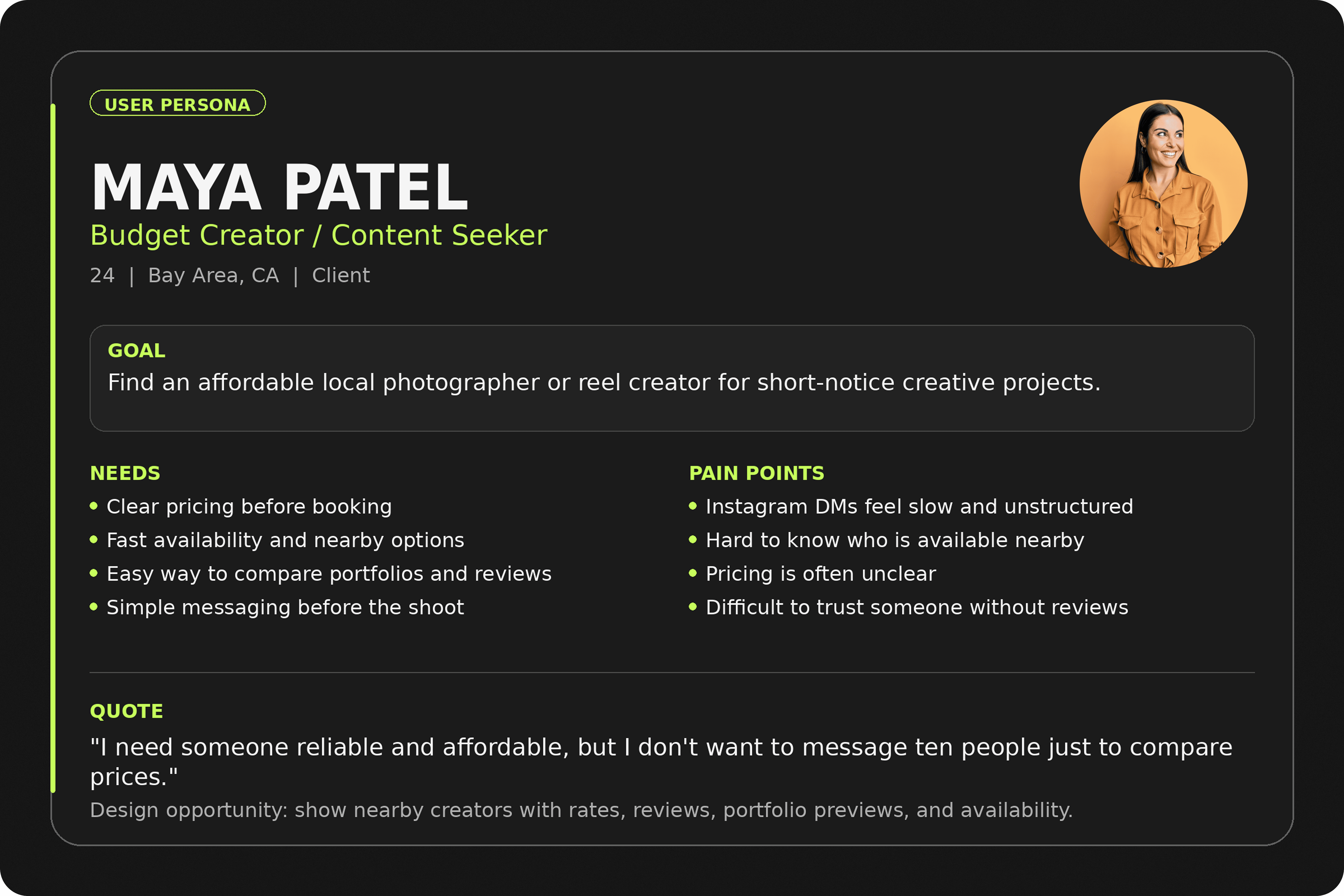
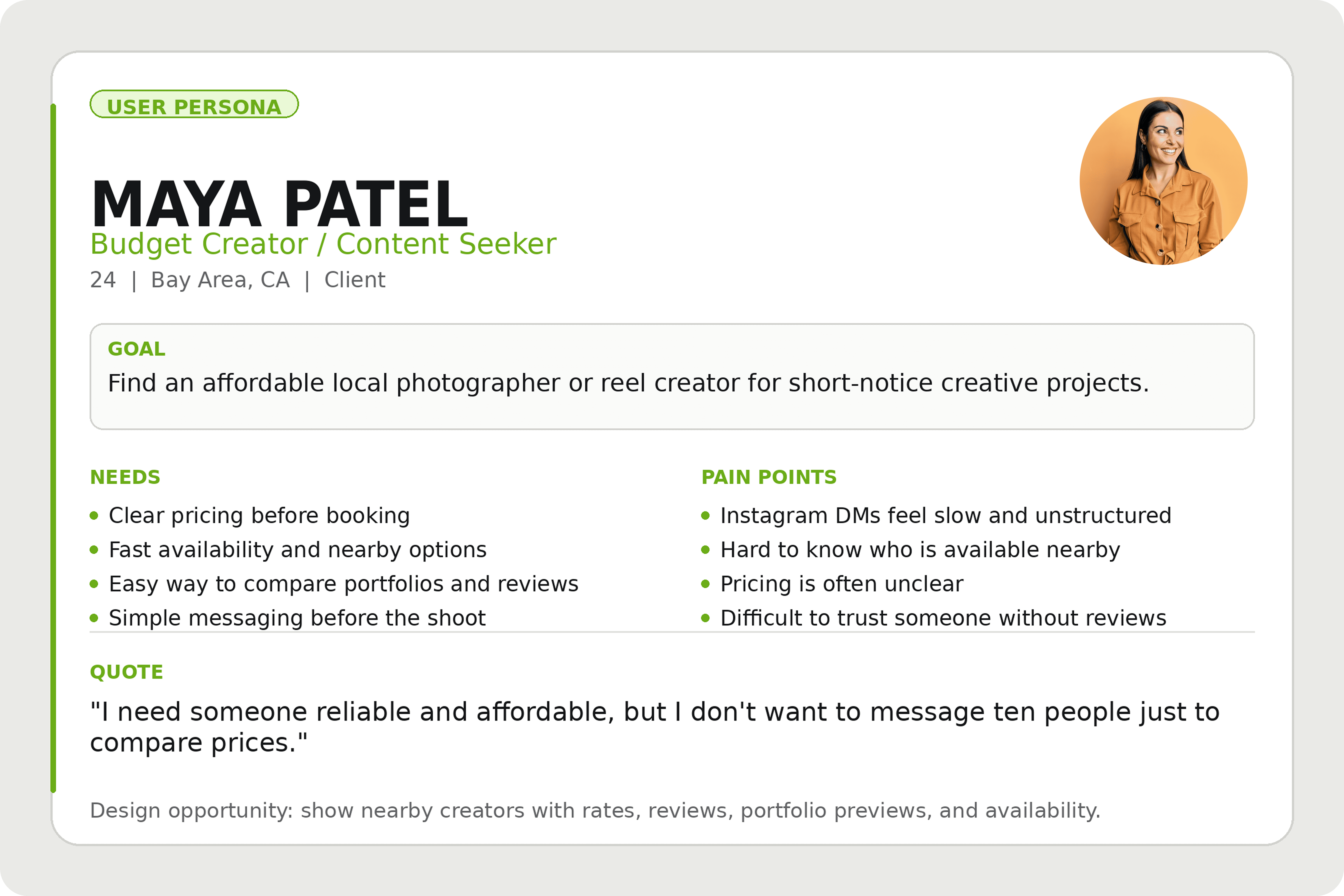
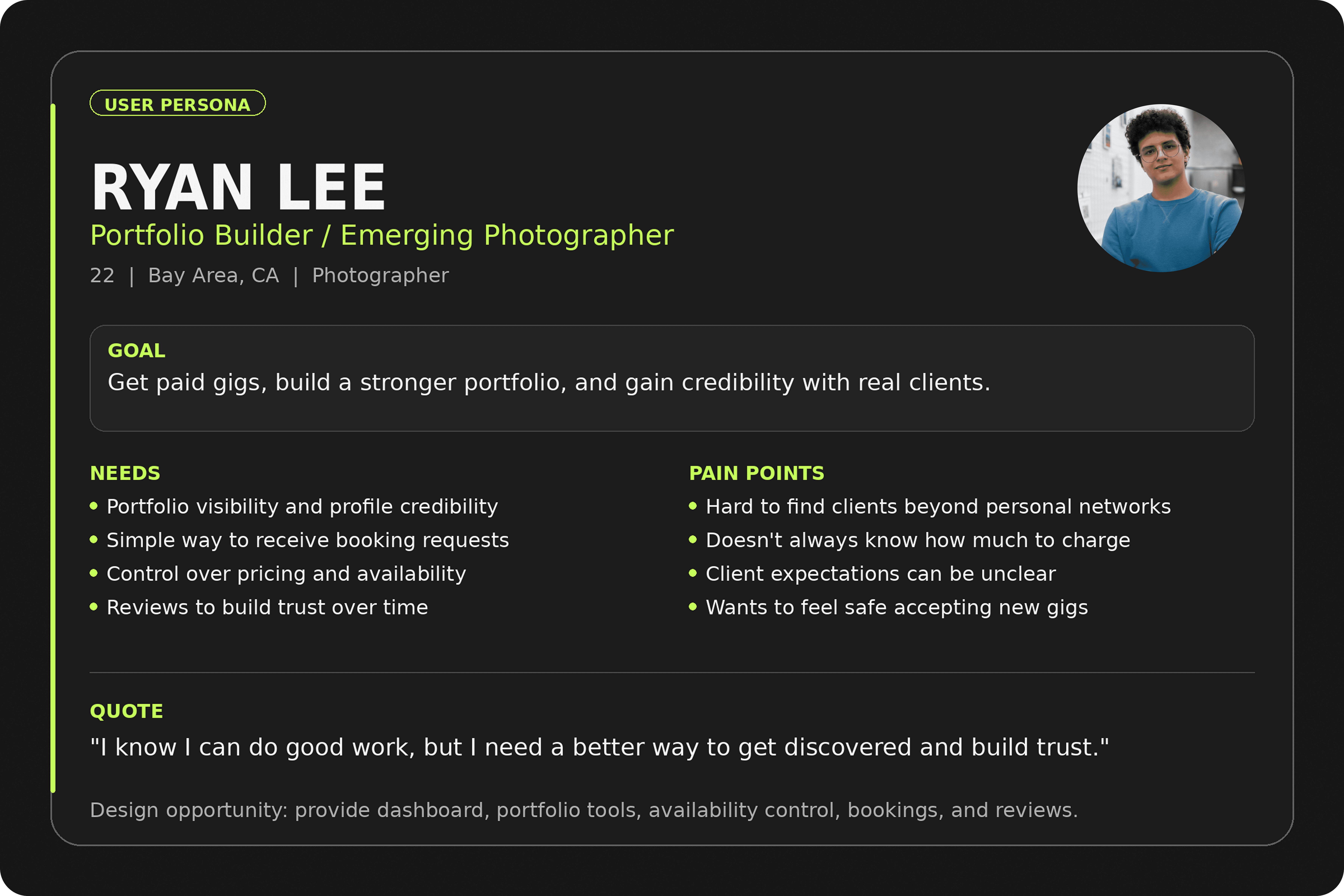
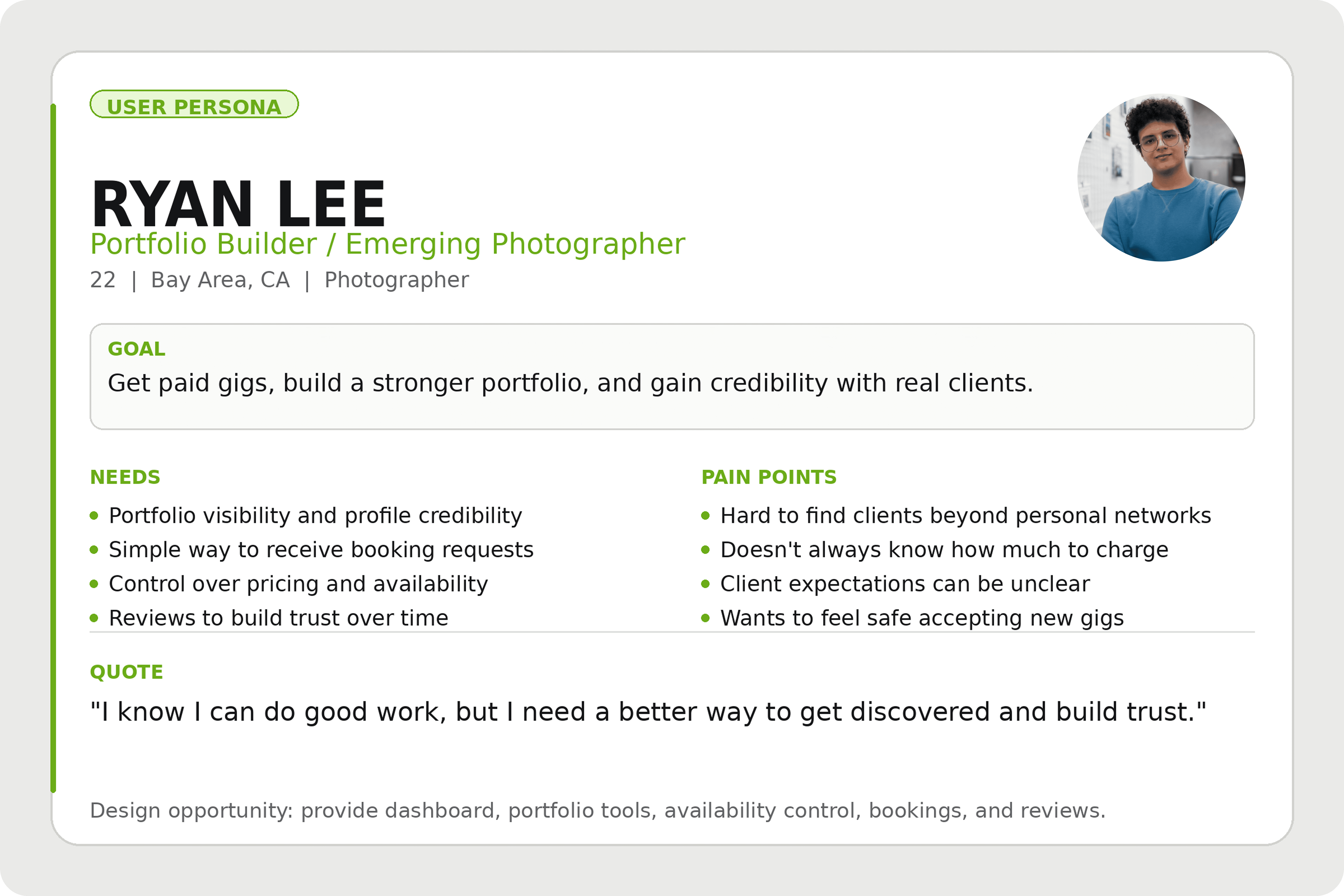
To make the research more specific, I created two core personas representing both sides of the marketplace: the client who needs affordable creative help, and the photographer who wants real opportunities to build experience and credibility.
Persona 1: Client
Persona 2: Photographer
Design Goals
Based on the research insights and user personas, I defined five design goals to guide StuCam’s product experience. These goals helped translate user needs into clear interaction and interface decisions.
Fast Local Discovery
Help clients quickly find nearby photographers or reel creators without searching across multiple platforms.
Trust Before Booking
Make portfolios, reviews, pricing, and availability visible early so clients feel confident before booking.
Clear Booking Flow
Create a simple path from discovery to profile viewing, booking, and messaging.
Photographer Growth
Give photographers tools to showcase work, manage availability, receive requests, and build credibility.
One App, Two Roles
Support both clients and photographers in one unified app with role-based experiences.
Mapping the Core Experience
After defining the research insights and personas, I mapped two primary user flows: one for clients looking to book photographers, and one for photographers managing their services. These flows helped clarify the key screens, actions, and decision points needed in the app.
Client Flow
Explore
→
Filter
→
View Profile
→
Book
→
Message
→
Review
Clients move from discovering nearby photographers to filtering options, reviewing profiles, booking a shoot, confirming details through messages, and leaving a review after the session.
Photographer Flow
Create Profile
→
Set Availability
→
Receive Request
→
Accept Booking
→
Manage Shoot
→
Build Reputation
Photographers move from setting up their profile and availability to receiving booking requests, coordinating with clients, managing shoots, and building credibility through completed work and reviews.
How this shaped the product
Mapping these flows helped define the app’s main navigation (Home, Feed, Bookings, Messages, Profile) and clarified the need for role-based experiences inside one unified app. For clients, the experience focuses on fast discovery and confident booking. For photographers, it focuses on visibility, availability control, booking management, and reputation building.
Challenge :
One of the main challenges is achieving a seamless blend between the spiral’s organic curves and the digital medium’s precision. The artwork must avoid appearing too mechanical or artificial, instead highlighting the natural, fluid qualities of the spiral.
Another challenge is ensuring the coral color remains vivid and harmonious with the background gradient, avoiding any visual clash or loss of contrast. Maintaining visual interest without overcrowding the composition is also essential.
Summary :
"Coral Spiral Abstract" is a visually striking 3D artwork that fuses modern digital aesthetics with organic forms. Through the interplay of a coral-colored spiral and a soft pink gradient background, the piece delivers a sense of movement, warmth, and sophistication.
This project demonstrates how thoughtful use of color and form can create digital art that is both contemporary and emotionally engaging.

More Projects
Tools:
Branding
Coral Spiral Abstract
Description: A visually striking 3D abstract artwork featuring a coral-colored spiral form with smooth, flowing curves and a soft pink gradient background, emphasizing modern digital aesthetics and organic geometry.
Type :
2025
Timeline :
Beauty
Context :
VisualForms Studio
Role :
3 weeks
Project Background & Personal Journey
StuCam started from a real-life moment when I met a singer on a bus who needed someone to shoot short videos/reels of her performance, but she did not know where to find an affordable and reliable local videographer. That moment made me realize there is a gap between people who need quick creative help and photographers or creators who are looking for real paid opportunities.
StuCam explores how a local-first booking platform can make it easier for clients to discover, compare, and book nearby photographers through portfolios, pricing, availability, and in-app messaging.
Problem :
In the world of digital art, it can be difficult to create abstract compositions that are both visually captivating and harmonious. Many 3D artworks either lack a sense of organic flow or fail to stand out due to uninspired color choices.
Solution :
This project introduces a 3D abstract artwork centered on a coral-colored spiral form with smooth, flowing curves. Set against a soft pink gradient background, the design leverages organic geometry to create a sense of movement and depth.
The use of coral tones brings warmth and vibrancy, while the gentle gradient enhances the overall softness and modern appeal. This composition aims to capture attention while remaining elegant and balanced.
User Archetypes
Based on the research, I identified four key user archetypes that shaped the design direction for StuCam. These archetypes helped me understand the different motivations, pain points, and expectations across both sides of the marketplace.
Portfolio Builder
A beginner photographer who wants real-world experience, paid gigs, and portfolio credibility.
Needs: visibility, trust, client opportunities
Pain point: people hesitate to book them without proof of experience
Opportunity: curated portfolio, reviews, and profile credibility
Budget Creator
A student, artist, or small business owner who needs affordable photography or reel content.
Needs: clear pricing, reliable options, simple booking
Pain point: professional services feel too expensive or hard to compare
Opportunity: transparent rates, filters, and local photographer discovery
Event Improviser
A performer, musician, or creator who needs someone available quickly for a shoot or event.
Needs: fast availability, location-based discovery, quick communication
Pain point: last-minute creative needs are hard to solve through DMs
Opportunity: availability toggle, Near You feed, and instant messaging
Side-Hustler
A photographer who wants flexible paid work while balancing school, work, or other commitments.
Needs: flexible scheduling, booking control, income opportunities
Pain point: inconsistent client flow and unclear expectations
Opportunity: booking dashboard, availability calendar, and structured client requests
User Personas
To make the research more specific, I created two core personas representing both sides of the marketplace: the client who needs affordable creative help, and the photographer who wants real opportunities to build experience and credibility.
Persona 1: Client
Persona 2: Photographer
Design Goals
Based on the research insights and user personas, I defined five design goals to guide StuCam’s product experience. These goals helped translate user needs into clear interaction and interface decisions.
Fast Local Discovery
Help clients quickly find nearby photographers or reel creators without searching across multiple platforms.
Trust Before Booking
Make portfolios, reviews, pricing, and availability visible early so clients feel confident before booking.
Clear Booking Flow
Create a simple path from discovery to profile viewing, booking, and messaging.
Photographer Growth
Give photographers tools to showcase work, manage availability, receive requests, and build credibility.
One App, Two Roles
Support both clients and photographers in one unified app with role-based experiences.
Mapping the Core Experience
After defining the research insights and personas, I mapped two primary user flows: one for clients looking to book photographers, and one for photographers managing their services. These flows helped clarify the key screens, actions, and decision points needed in the app.
Client Flow
Explore
→
Filter
→
View Profile
→
Book
→
Message
→
Review
Clients move from discovering nearby photographers to filtering options, reviewing profiles, booking a shoot, confirming details through messages, and leaving a review after the session.
Photographer Flow
Create Profile
→
Set Availability
→
Receive Request
→
Accept Booking
→
Manage Shoot
→
Build Reputation
Photographers move from setting up their profile and availability to receiving booking requests, coordinating with clients, managing shoots, and building credibility through completed work and reviews.
How this shaped the product
Mapping these flows helped define the app’s main navigation (Home, Feed, Bookings, Messages, Profile) and clarified the need for role-based experiences inside one unified app. For clients, the experience focuses on fast discovery and confident booking. For photographers, it focuses on visibility, availability control, booking management, and reputation building.
Challenge :
One of the main challenges is achieving a seamless blend between the spiral’s organic curves and the digital medium’s precision. The artwork must avoid appearing too mechanical or artificial, instead highlighting the natural, fluid qualities of the spiral.
Another challenge is ensuring the coral color remains vivid and harmonious with the background gradient, avoiding any visual clash or loss of contrast. Maintaining visual interest without overcrowding the composition is also essential.
Summary :
"Coral Spiral Abstract" is a visually striking 3D artwork that fuses modern digital aesthetics with organic forms. Through the interplay of a coral-colored spiral and a soft pink gradient background, the piece delivers a sense of movement, warmth, and sophistication.
This project demonstrates how thoughtful use of color and form can create digital art that is both contemporary and emotionally engaging.
More Projects
Tools: